
Dogs shouldn’t sleep on hard floors
We believe helping dogs sleep better begins with doing what’s right.
Protecting their spine.
Reducing pressure on joints.
Choosing proper support.
These are the standards we don’t compromise on:
Non-Negotiable #1
Proper Spinal Alignment
We don’t compromise on spinal support.
If the spine isn’t supported, it’s not orthopedic.
A proper bed supports your dog’s full body weight evenly - without sinking or collapsing.
Rule of thumb:
If a bed sinks under your dog’s weight, it isn’t providing spinal support.
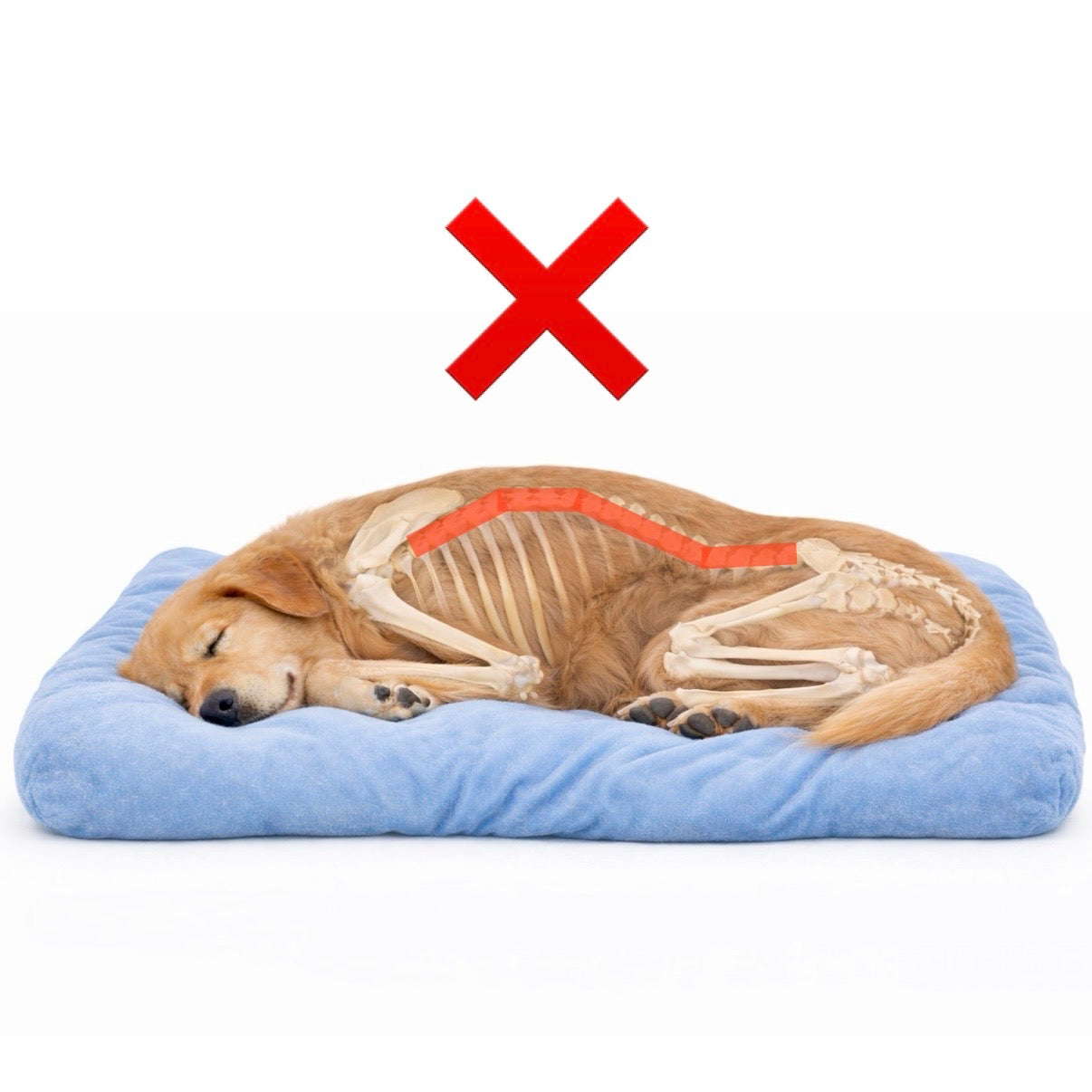
Poor Spine Alignment ❌
Too soft or uneven support causes the body to sink, forcing the spine out of its natural position. Pressure builds on the shoulders and hips, leading to discomfort and long-term joint strain.
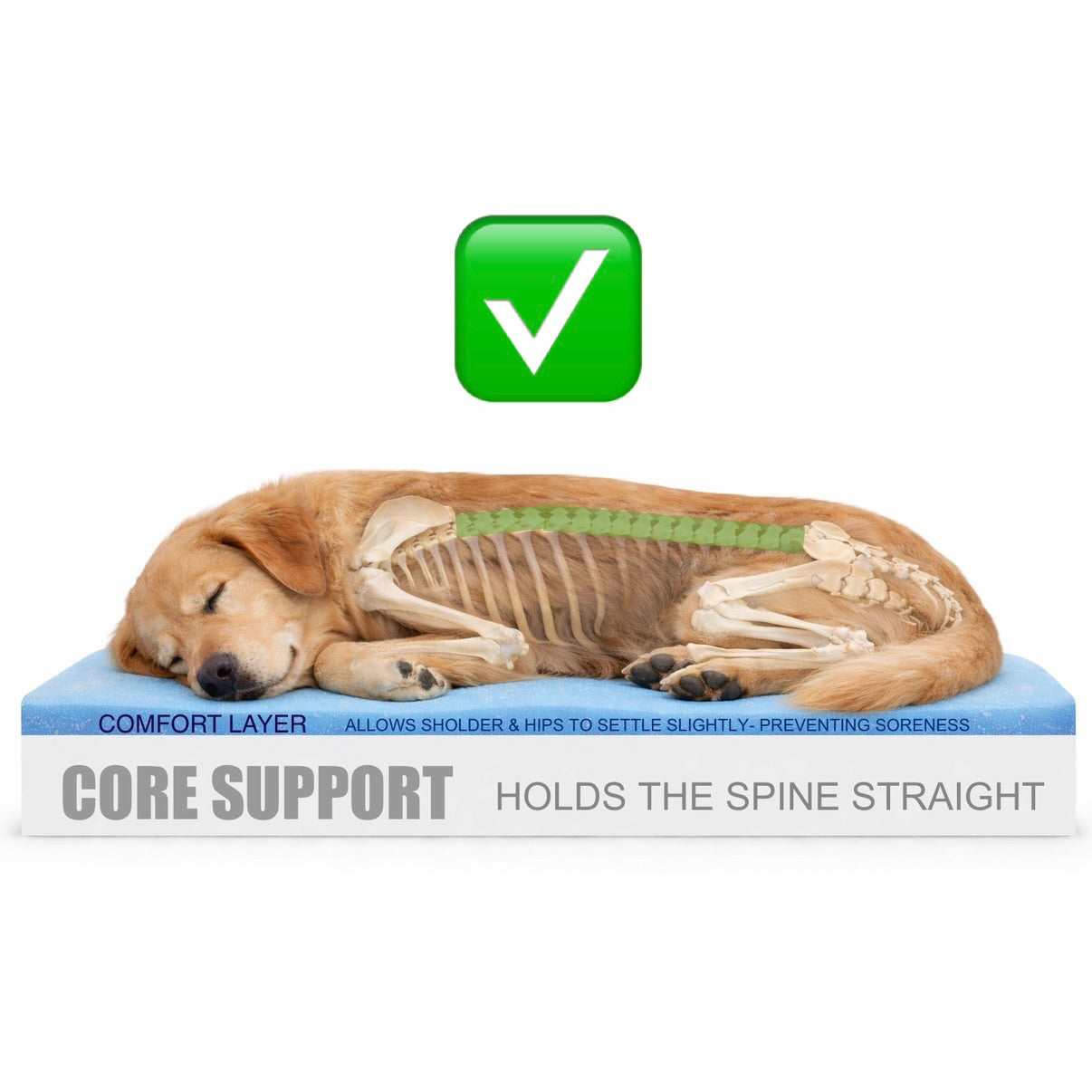
Spine Alignment ✅
Adapts to your dog’s body while keeping the spine in a healthy, neutral position. Cushions shoulder and hip to relieve pressure and keep them comfortable
spine-aligned bedsNON-NEGOTIABLE #2
Most dogs are side sleepers, pressure distribution matters.
Side sleepers concentrate weight on the hips and shoulders. Over time, repeated pressure can lead to problems such as:
• Calluses on the elbows
• Hygromas (fluid-filled swellings caused by pressure)
• Reduced circulation in the joints
• Stiffness and discomfort after resting
A proper orthopedic bed with dual-layer works differently. It cushions and distributes pressure evenly across the dog’s entire side, allowing the shoulders and hips to sink slightly while still supporting the spine.
This prevents pressure from concentrating on the joints and helps dogs rest more comfortably. This is why pressure distribution is essential for dogs, especially as they age or if they are prone to joint issues.
Rule of thumb:
Without dual-layer support, a bed can’t distribute pressure.
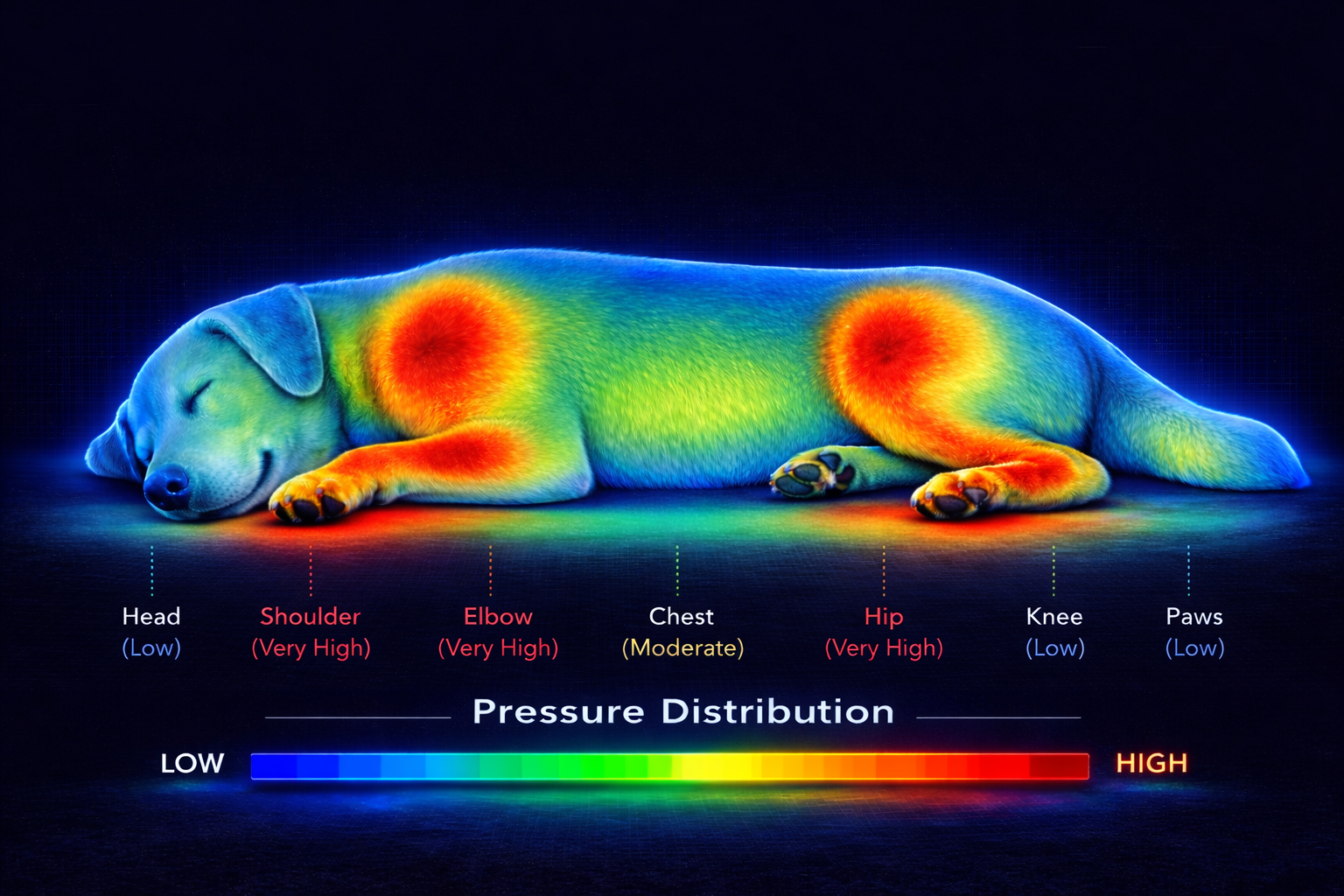
Pressure concentrated ❌
Overly firm beds concentrate pressure on shoulders, hips, and elbows — causing stress, reduced circulation, and numbness. No different from sleeping on the floor.
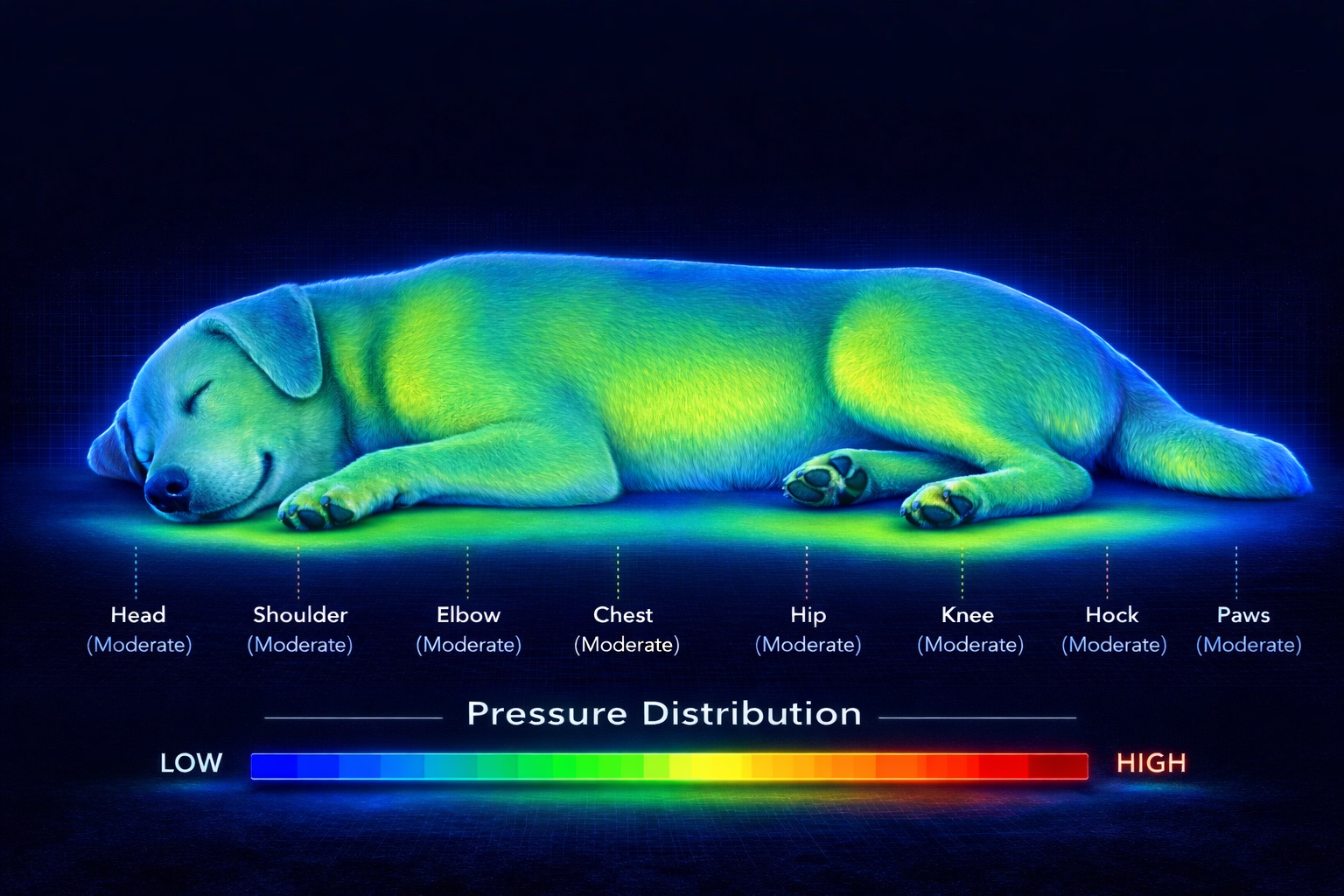
Pressure distributed ✅
Kauda orthopedic beds spreads weight evenly - reducing strain on hips, shoulders, and elbows.
Without two layers, it’s either too hard on the joints — or too soft to support the spine.
NON-NEGOTIABLE #3
Small dogs shouldn’t have to jump to go bed
We don’t compromise on safe access.
Jumping creates repeated impact on the joints and spine — especially for small and short-legged dogs.
Over time, this leads to joint stress and strain.
A proper bed allows low, easy entry.
Low entry isn’t a feature. It’s proper care.
Rule of thumb:
If your dog has to jump to get in, the bed is too tall.
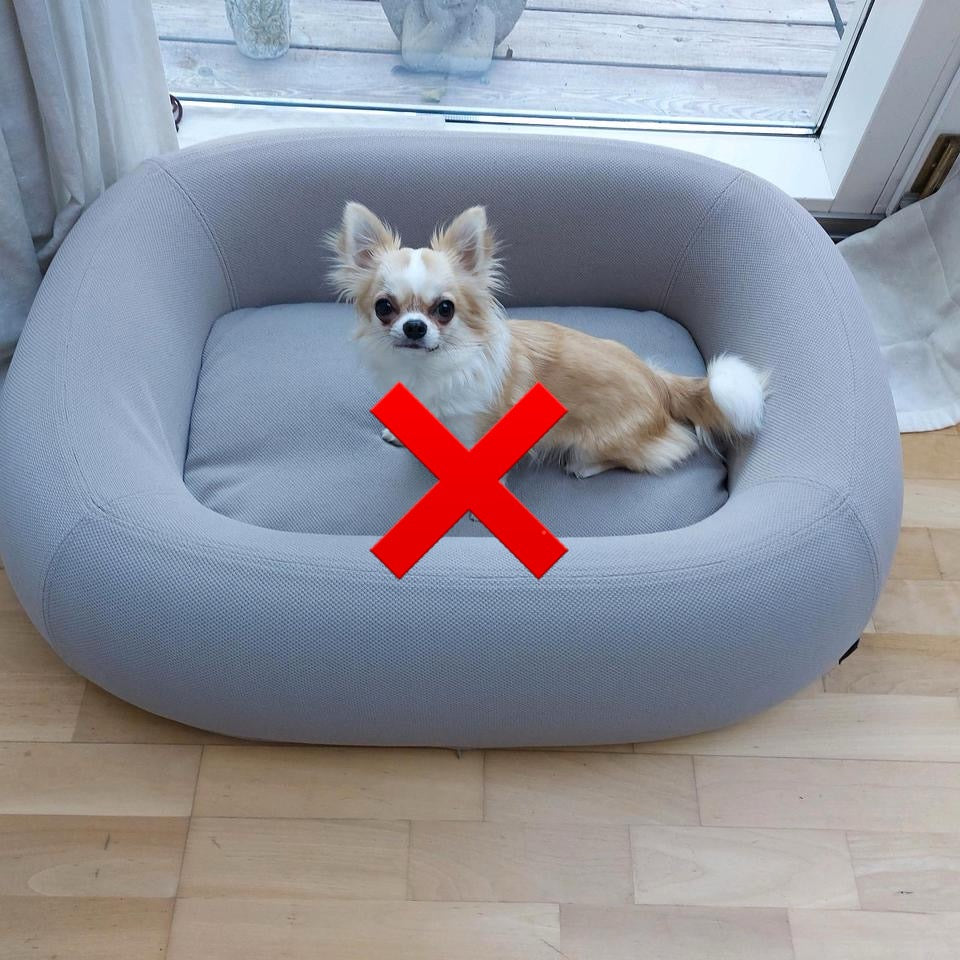
Tall Bolsters / Jump ❌
Constantly jumping in and out over tall bolsters strains your small dog’s spine.

Low Entrance / Step ✅
In and out safely - without jumping. Protecting your dog’s spine from unnecessary impact.
Low entrance bedsNon-Negotiable #4
Singapore is already hot. Dog beds shouldn’t trap heat.
We don’t compromise on climate-appropriate design.
Singapore is warm and humid year-round.
Beds made for winter climates don’t belong here.
Dogs in Singapore need materials that breathe, release heat, and stay comfortable in humidity.
Trapped heat affects how dogs settle and rest.
Cooling isn’t a feature. It’s responsible design.
Rule of thumb:
If a bed traps heat, it isn’t built for Singapore’s climate.
Non-Negotiable #5
In Singapore, extra space isn’t a luxury — it’s temperature control.
We don’t compromise on natural movement.
Dogs regulate heat through positioning.
They stretch. They rotate. They shift to release warmth.
Tight beds restrict how the body settles.
A little extra space allows heat to escape and helps dogs rest more comfortably — especially in Singapore’s heat and humidity.
Extra space isn’t indulgence.
It’s temperature regulation.
Rule of thumb:
If your dog can’t fully stretch out, the bed is too small.
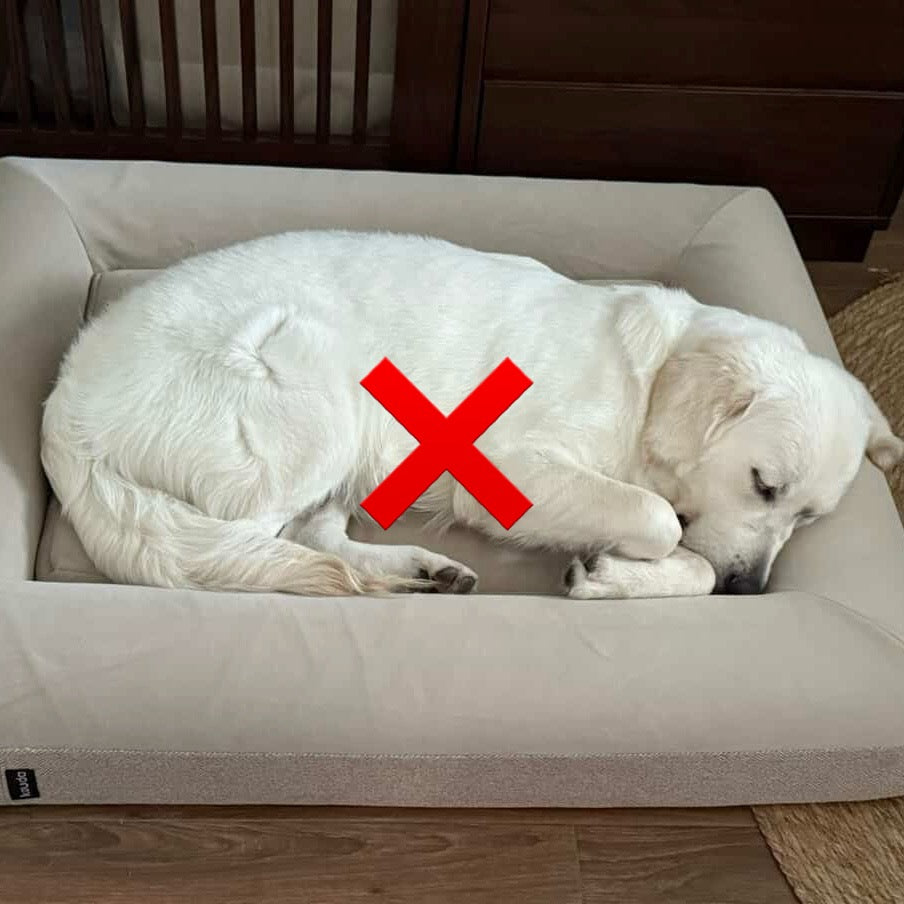
Tight Space ❌
Heat builds up when dogs can’t adjust position
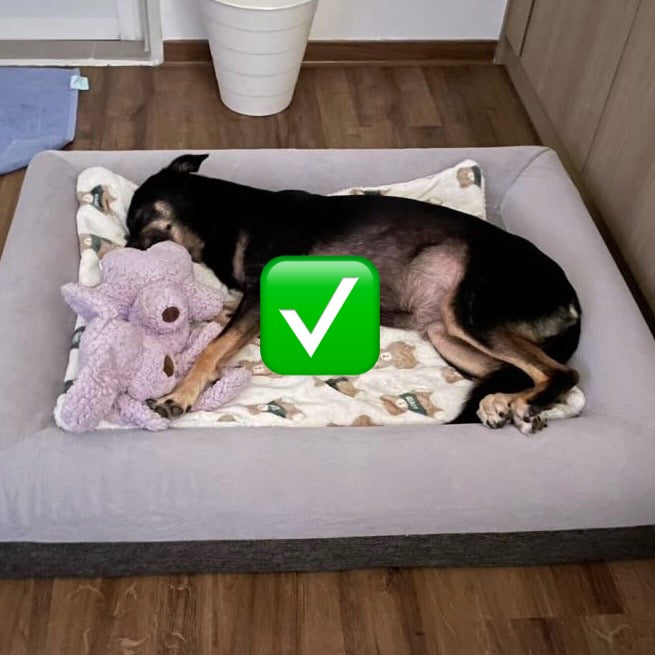
Extra Space ✅
Dogs adjust naturally to regulate temperature
Non-Negotiable #6
Singapore is too hot for fluffy fabrics
We don’t compromise on climate-appropriate materials.
In a warm, humid climate, fabric choice matters.
Fluffy, heat-trapping materials hold warmth and moisture — affecting how dogs settle and rest.
Beds in Singapore should use breathable, short-pile fabrics that release heat and remain comfortable, even during long naps.
Fabric isn’t aesthetic. It’s climate function.
Rule of thumb:
If a fabric feels warm or plush to the touch, it’s likely trapping heat.

Faux Fur ❌
Long-pile fabrics trap heat and humidity.
They’re not suitable for Singapore.

Teddy / Sherpa ❌
High-pile and fluffy fabrics trap heat and humidity.
They’re not suitable for Singapore

Cooling Fabrics ✅
Breathable and cooling to touch.
Cooling yarn is designed to don’t trap heat


We don’t compromise.
On spinal support.
On joints.
On safe access.
On natural movement
On climate-appropriate materials
If these principles align with yours,
you’re in the right place.